print header

Tobacco control

Share this page Email this page to a friend Share this page via Twitter Share this page via Facebook Share this page via LinkedIn

Approximately one in five of all cancer deaths are due to tobacco smoking. Smoking remains the leading cause of preventable death and disease in NSW and the biggest contributing risk factor to cancer.

Research shows that most smokers will eventually successfully quit on their own. However smoking is very addictive and some smokers do need assistance to kick the habit for good.

That's why the Cancer Institute NSW has employed a multi-pronged approach to tobacco control.

This includes:

  • developing hard-hitting mass media campaigns that educate the community of the harms of smoking and motivate and support smokers to quit
  • managing the NSW Quitline and iCanQuit website, which provide helpful quit smoking information, guidance and support to smokers and recent quitters;conducting research,evaluation and monitoring on the effectiveness of our programs
  • implementing projects that target priority or high-need populations
  • providing strategic policy advice to the NSW Government on tobacco control.

Decreasing the rate of smoking in the community

Smoking is estimated to place an $8.4 billion burden on NSW families, workplaces and the health system which is why the Cancer Institute NSW places an emphasis on driving down smoking rates across the community. In partnership with key government and non-government agencies, we're committed to achieving a daily smoking rate of 10 per cent or lower by 2020.

Smoking is particularly high in some culturally and linguistically diverse communities.
For further information, please read our report on,
Tobacco smoking in Arabic, Chinese and Vietnamese communities in NS W:
A Qualitive Exploration

Our strong anti-tobacco mass media campaigns help educate the community of the dangers of smoking and prompts smokers to quit and stay quit.

Quit smoking support is available through the iCanQuit website and the NSW Quitline (13 7848).

Our campaigns

Anthony

Anthony

The Anthony Campaign is based on the personal testimonial of Anthony Hicks who was diagnosed with throat and lung cancer, caused by smoking. The campaign demonstrates the real health consequences of smoking.

Anthony passed away 10 days after filming the advertisement.

Best intentions

Best Intentions

The Best Intentions Campaign demonstrates the regret of not quitting and the reduced quality of life for the smoker and other members of the family. It emphasises that there is never going to be a perfect time to quit. You have to quit now while you still can.

Bronchoscopy

Bronchoscopy

The Bronchoscopy Campaign reminds smokers of the well-established health consequence of smoking - lung cancer. The whistling or wheezing noise is the sound of a lung tumour almost completely blocking an airway.

Bubblewrap - lung disease

Bubblewrap

Sufferers of the disease emphysema describe it as a living breathing hell or like they are suffocating 24 hours a day, seven days a week.

In November 2005, the Cancer Institute NSW implemented the Bubblewrap campaign to demonstrate to smokers what lies ahead if they don't quit smoking now.

change in the air

Change is in the Air

On 12 October 2004, Cabinet approval was given to amend the Smoke-free Environment Act 2000 to phase out smoking in indoor licensed areas by 2 July 2007. All NSW licensed pubs, clubs, nightclubs and the casino are now smoke-free.

eating you alive

Cigarettes Are Eating You Alive

The Cigarettes Are Eating You Alive Campaign depicts the real life health consequences of smoking. It emphasises the fact that smoking affects almost every organ of the body.

emphysema

Emphysema

If you smoke, chances are you already have emphysema in its early stages - just about every smoker does. This campaign encourages smokers to quit by engaging viewers in what it is like to have emphysema.

everybody knows

Everybody knows

The Everybody Knows Campaign presents a sequence of memorable scenes from existing quit smoking campaigns aired in NSW over the past decade. It shows the range of diseases and harm caused by smoking.

Excuses

Excuses - Quitting is hard, not quitting is harder

The Excuses Campaign challenges smokers' excuses and rationalisations for continuing to smoke, by demonstrating common excuses against the consequences of delaying the decision to quit.

get off cigarettes

Get Off Cigarettes

Quitting smoking on your own can be hard but getting the right help can make it much easier. The Get Off Cigarettes Campaign reminds smokers that a range of professional help is available by talking to their GP, pharmacist or Quitline.

Health warnings

Health Warnings

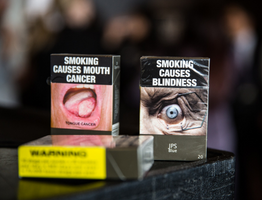
Following the introduction of graphic health warnings on cigarette packs in 2006, the Cancer Institute NSW has been developing campaigns that build on these images to create a lasting impression every time a smoker looks at their cigarette pack.

iCanQuit-willpower

iCanQuit

The iCanQuit Campaign demonstrates the value, importance and role of willpower in quitting smoking. Informed through research with NSW smokers this campaign challenges smokers to re-think their understanding of willpower and how they could use willpower if they were planning to quit.

if smoking was a friend

If Smoking was a Friend

If Smoking was a Friend Campaign questions the relationship between smokers and their cigarettes. It shows a sequence of identifiable situations where personal, social and financial activities are influenced by this habit. A man holding a cigarette reflects on this relationship that will more than likely result in an inevitable health consequence.

National campaign

National Tobacco Campaign Revised

The updated National Tobacco Campaign Revised makes a stronger connection between the smoking-caused diseases and the graphic health warnings on cigarette packs.

Quitline

Quitline

The Quitline Services Campaign provides smokers with an insight into the range of services and support available through the Quitline.

Sponge

Sponge

The iconic Sponge quit-smoking advertisement which big-tobacco tried to ban almost 25 years ago has been remade. Its key strength lies in its simplicity and ability to communicate the immediate health consequences of smoking.

stairway to emphysema

Stairway to Emphysema

The Stairway to Emphysema Campaign links shortness of breath with the early stages of emphysema.

What's worse

What's Worse

The What's Worse campaign encourages smokers to quit by emphasising the real health consequences of smoking and how it affects not only the smoker, but the family as well. Your smoking is not just about you.

Who will you quit for?

What will you quit for?

The What Will You Quit For? campaign encourages smokers to consider their reasons for quitting by sharing personal stories from former smokers.

WeCanQuit - Lisa Gormley

WeCanQuit

Smokers are encouraged to take the pledge to quit smoking today with the knowledge that smoking-related diseases such as emphysema are permanent and can't be repaired. To help smokers in their journey to quit, friends and family are also encouraged to give up something to show their support.


Top of page